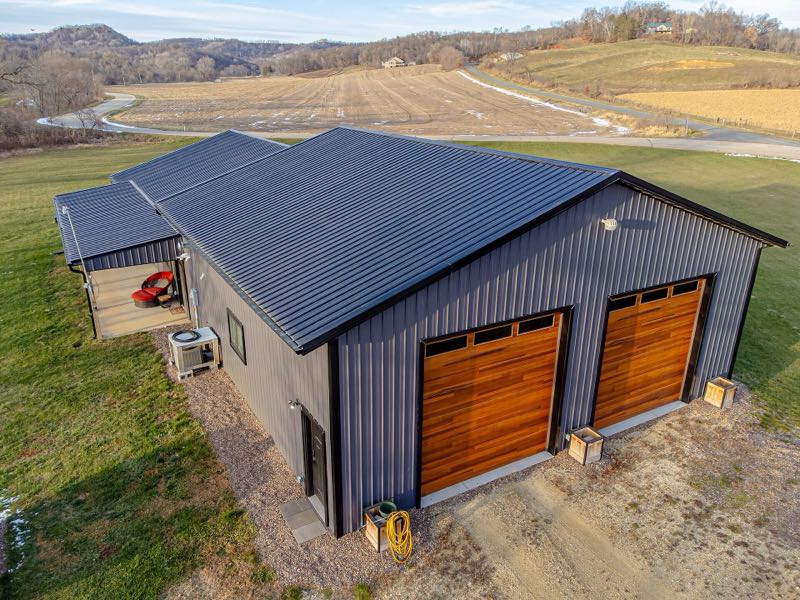
The honest answer is a wide range, and most numbers you see online leave out half the bill. A builder’s quote usually covers the building. It often does not cover the land work a rural lot needs before anyone can live there.
We do not print price ranges on this page yet. We publish a figure only when we can name its source and date, such as a county fee schedule or prices builders publish themselves. Until then, this guide lists every line you need a price for, and who gives you each one.
The building: three levels of “done”
| What you buy | What it usually includes | Who prices it |
|---|---|---|
| Kit only | The steel or post-frame package, delivered. You hire the foundation, the erection and everything else. | A kit or building supplier |
| Shell (dried-in) | Slab, frame, roof, siding, exterior doors and windows. The inside is empty. | A shell builder |
| Turnkey | A finished home: insulation, interior framing, plumbing, electrical, HVAC, drywall, cabinets, flooring and fixtures. | A turnkey builder |
Two things push a barndominium toward the top of any builder’s price: a lot of finished living space under the roof instead of shop space, and custom finishes.
Shop space is the cheap part. Unfinished shop or garage space costs much less per square foot than finished living space. That is why a barndominium can look cheap per square foot when a quote averages the two. Ask each builder to price living space and shop space on separate lines.
The costs that catch people: getting raw land ready
If your land has never had a house on it, get a price for each of these before you think about the building.
| Line item | Who prices it | What moves the price |
|---|---|---|
| Boundary survey | A licensed land surveyor | Acreage, tree cover, and how well the old deeds describe the corners |
| Soil evaluation and septic permit | Your county Environmental Health office | County fees, and whether you use a private soil scientist |
| Septic system | A certified septic installer | Bedrooms, and whether the soil allows a conventional system or needs an engineered one |
| Drilled well | A certified well driller | Depth to good water, casing, pump and tank |
| Clearing and pad | A land clearing or grading contractor | Tree cover, stumps, and how much the pad must be built up |
| Driveway | A grading contractor | Length, base, culverts, and an NCDOT driveway permit on a state road |
| Power to the site | Your electric utility | Distance from the nearest line |
How to get a real number
- Get the septic permit first. It sets the number of bedrooms and where the house can sit, and it often decides what kind of system you need.
- Ask builders to quote the same scope. “Shell” means different things to different companies. Get a written list of what is included.
- Get at least three quotes from NC barndominium builders, and separate quotes from well drillers and septic installers.
- Add a contingency. Raw land surprises people: rock in the well, a longer power run, a wetter septic area than expected.
- Check the license. In North Carolina, any project of $40,000 or more needs a licensed general contractor. Each builder listing here shows what we found on the state board and when we looked.
Is a barndominium cheaper than a stick-built house?
Sometimes. A simple box with a big clear-span roof goes up fast and uses less framing. But a finished interior costs about the same as in any house, and some lenders and appraisers still struggle to find comparable sales for barndominiums, which can affect your loan. See the financing and appraisal guide.
Sources and method
This guide is general information, not legal, engineering or lending advice. We print a figure only when we can name its source and date. Found something wrong? Tell us. How we work.
